Thursday, 30 March 2023

Paper No.107 20th Century Literature - 2

 Assignment Writing - Paper No.107 

Welcome readers! This blog is a part of assignment writing of Semester-2, assigned and Inspired by Dr.Dilip barad sir- Department of English, Maharaja Krishnakumarsinhji Bhavnagar University. 

  ●  Name :- Hetal Pathak 

  ● RollNo. :- 09


 ● Semester :- 2 ( Batch 2022 - 2024 ) 


● Enrollment No. :- 4069206420220022


● Paper No. :- 107


 ● Paper Name :- The Twentieth Century Literature: From World war ll to the End of the Century 


● Topic :-  Use Of symbolism in George Orwell’s Novel ‘1984’


● Submitted to :- Smt. S.B.Gardi Department Of English,Maharaja Krishnakumarsinhji Bhavnagar University


● Email address :- hetalathak28@gmail.com


● Date of Submission :- 31st March 2023


  Use of Symbolism in George Orwell's Novel - '1984' :- 


□ Table of Contents :- 


 ▪︎ Introduction 

 ▪︎ What is Symbolism - General Introduction 

 ▪︎ Definition of Symbolism 

 ▪︎ Importance of Symbolism in literature 

 ▪︎ Symbols in George Orwell's Novel '1984'

  ▪︎ Conclusion 


        ◇ Introduction :- 

George Orwell is one of the World 's most influential writers, the Visionary Author of 'Animal Farm' and Nineteen Eighty Four. He eyewitnesses, non - Fiction Classics Down and out in Paris in London , The Road to Wigan Pier and Homage to Catalonia.


Eric Arthur Blair, better known by his Pen Name George Orwell was born in India in the year 1903 into a Comfortable ' lower - middle class ' family. Orwell's father had Served the British empire, and Orwell's own first Job was as a Policeman in Burma. Orwell Wrote in "Shooting an elephant" 1936 that his time in the Police force had shown him the ; 


    " Dirty Work of Empire at Close Quarters ," the experience  made him a lifelong foe of Imperialism.  


By the time of his death in 1950, he was World renowned as a Journalist and Author. For his eyewitness reporting on war and Poverty , for his Political and Cultural Commentary, where Orwell stood up to Power and said the Unsayable ; 


     " If liberty means anything at all it means the right to tell People what they do not want to hear. " 


For his Fiction , Including two of the most Popular novels ever Written ' Animal Farm ' and ' Nineteen- Eighty Four.' His work is characterised by lucid Prose, Social Criticism and Opposition to totalitarianism. He was a Supporter of democratic Socialism.


     ◇ About the Novel :- 


Nineteen Eighty Four, also Published as 1984, Novel written by English Author Grorge Orwell. It is Published in 1949 as a Warning against totalitarianism.  The ceiling dystopia made a deep impression on readers , and his ideas entered mainstream culture in a way achieved by very few books. 


 " Orwell 's novel 1984 is a Warning for the human race. "  The book's title and many of its Concepts Such as Big Brother and the Thought Police are instantly recognized and Understood , Often as bywords for modern Social and Political abuses. Orwell wrote 1984 while he was seriously ill with tuberculosis.  Nineteen- Eighty Four is Perhaps Orwell's most famous work. The story of Winston Smith who rewrites Times editorials at the Ministry of Truth to suit the Party's version of events.This novel introduces Big Brother, Thought Police, Room No.101 , doublethink and Newspeak to the English language. 


 A Satire on totalitarianism.  1984 is a testament to the Potential Power of the Modern Political Systems , and the dark Side of human nature. As O'Brien tells to Winston Smith ; 

              " The Object of Power is Power.' 


◇ What is Symbolism :- 


Symbolism is a Literary device in which a Writer uses one thing - Usually a Physical Object or Phenomenon- to represent something more abstract. A strong symbol usually shares a set of key Characteristics with whatever it is meant to Symbolise, or is related to it in some other way. Characters and events can also be symbolic. 


  Symbolism can be very Subtle, So it isn't always easy to identify or understand.  It can Sometimes be difficult to say whether an author intended for something to be symbolic or not. Symbolism allows writers to Convey things to their readers Poetically or indirectly rather than having to say them outright , which can make texts seem more nuanced and Complex. 


 ◇ Definition of Symbolism  :- 


According to Merriam Webster Dictionary of English language; 

                              " Symbolism means an art or Practice of using Symbols especially by investing things with a Symbolic meaning." 


◇ Importance of Symbolism in Literature :- 


Symbolism is when the author uses an object or reference to add deeper meaning to a story. There are hundreds of different Symbols authors and Poets use. Symbolism is a very important aspect of writing good Literature. It can have a major impact on a piece of Literature. Most of the readers, including us, miss the Symbols the first time reading through the work and are unable to get it until someone teaches or reads it again. Symbols are hard to detect in the Story or Poem. So, Symbols are very important in literature.  


◇ Symbols in George Orwell's Novel  - ' 1984 ' :- 


 In 1984 , George Orwell used a number of Symbols to represent a deeper meaning for the readers. Following are the Symbols Presented in dystopian science fiction novel Nineteen- Eighty Four. 


  1. Big  Brother 

  2. The Telescreen 

  3. Glass Paperweight

  4. St.clement's Church 

  5. The red armed Problem woman

  6. The Rats and Room No. 101

  7. The Place where there is no Darkness 


Let Us understand these Symbols in detail.


Big Brother :-  

Throughout London , Winston Smith Sees a Posters Showing a man gazing down over the Words -  ' BIG BROTHER IS WATCHING YOU, '  Everywhere he goes. Big Brother is the face of the Party. The citizens are told that he is the leader of the nation and the head of the Party, but Winston can never determine whether or not he actually exists.


In any Case, the face of Big Brother Symbolises the Party in its Public manifestation; he is a reassurance to the most People ( the Warmth of his name Suggests his ability to Protect ), but he is also an Open threat that one can escape his gaze. Big Brother also Symbolises the Vagueness with which the higher ranks of the Party Present themselves. It is impossible to know who really rules Oceania , what life is like for the rulers , Or why they act as they do. Winston thinks he remembers that Big Brother emerged around 1960, but the Party's Official records date Big Brother's existence back to 1930 , therefore Winston was ever born. 


     " It was one of those Pictures which are so Contrived ; 

  that the eyes follow you about when you move.

  Big Brother is watching you , the Caption beneath it ran. "


Big Brother also Symbolises an open thread that no one can escape his gaze therefore no one can break his rules. Besides, the name itself represents irony since the name of Big Brother should be a kind of Person but we find the complete opposite in this novel.


The Telescreen  :- 

The Omnipresent telescreens are the book's most visible Symbol of the Party's Constant monitoring of its Subjects. In their dual capability to blare Constant Propaganda and observe citizens.


' There was no place where you could be more Certain that the telescreens were watched Continuously. " 


 The Telescreens are everywhere, at home, office and bars. The Signifier of these telescreens is regular T.v. Present News. However, The Telescreens are camera devices that are used by the dictator of Oceania to Prevent anyone in his realm from forming conspiracies with others against the government.  Also they Symbolises how a totalitarian  government abuses technology for its own benefits instead of exploiting its knowledge to improve Civilization. 


The Glass Paperweight  :-

The major symbol of the Novel is the Paperweight which Winston Smith buys from Mr.charrington. In George Orwell's Novel 1984 the Glass Paperweight becomes in Winston Smith 's eyes a symbol of the past which Winston values greatly but which the Party wishes to obliterate. Winston 's purchase of this Paperweight constitutes a Further act of rebellion against the state. This Paperweight is a dangerous thing for a party member to have in his possession. Anything old and for that matter anything beautiful is always suspect in Oceania. But the Paperweight does not symbolise the past only. It acquires a whole Complex of meaning for Winston.  


The Paperweight has yet another kind of Significance.  It Suggests those valuable feelings which in his dream he remembers to have been experienced by his mother. For that dream had all occurred inside the glass Paperweight, through the surface of the glass was the dome of the sky and inside the dome everything was flooded with a clear, soft light. 


  Finally when Winston Smith and Julia are seized by the Thought Police we have the climax of horror in the Paperweight being smashed to pieces by a police officer.  Given the many associations of the Paperweight this crash is the most terrible sound in a scene that conveys the transition from a sense of quiet joy to one of stark horror.


St. Clement 's church  :- 

By deliberately weakening People's memories and flooding their minds with Propaganda, the party is able to replace individual 's memories with its own version of the truth. It becomes nearly impossible for people to question the Party's Power in the present when they accept what the party tells them about the past - that the party arose to Protect them from bloatedness.


The old picture of St.clement's Church in the room that Winston rents above Mr.charrington's shop is another representation of the long past. Winston associates a song with the picture that ends with the words ; 

                            " Here Comes the chopper to chop off your head ."  This is an important foreshadow, as it is the telescreen hidden behind the picture that ultimately leads the Thought Police to Winston Symbolises the Party's corrupt control of the past. 


The Red armed Prole woman :- 

The red armed Problem woman whom Winston Smith hears singing through the window represents Winston 's hope for the long term future. The possibility that the process will eventually come to recognize their plight and rebel against the Party. Winston Sees the prole woman as a prime example of reproductive virility; he often imagines her giving birth to the future generations that will finally challenge the Party's authority.  


The Rats and Room No.101 :- 


   " I would not Confess anything ! Just tell me what it is and I will confess straight off. 

  Write it down and I will sign it - anything! Not Room No.101 ! " 


 The symbol of Rats appears many times in the novel. Firstly, appeared in the room of Charrington when Winston met Julia. The signifier of the Rats is a regular small Animal but the signified in this scene is a warming sign and it represents a horror for Winston. It is revealing that he is more afraid of Rats than anything else. So the Rats on this room represent a Warning sign for Winston from the horror in which this room will bring him.


 The second scene is in room no.101 that represents the worst thing that could happen to anyone , where the prisoner faces his / her own worst nightmare that breaks down their resistance.  This signified in this scene for Winston is a threat since they represent his worst fear , In which Mr. O' Brien has threatened Winston.


Room 101 symbolizes the kind of torture which nobody can endure or withstand. Only those persons, who cannot be converted by the ordinary kinds of torture, are sent to Room 101. What a prisoner has to face in Room 101 is so terrifying and awful that he feels compelled to make an abject surrender of himself to his tormentors. One of the prisoners, when ordered to be taken to Room 101, feels so terrified that he makes the following appeal to the prison officials  


    " Do anything to me. Shoot me. Hang me. Sentence me to twenty-five years prisoner. But not Room 101! " 


This prison would not mind if his wife and three children are murderer in his very presence if he can be saved from the kind of torture to which he will be subjected in Room 101. O’Brien tells Winston that in Room 101, there is the worst thing in the world, he says, varies from individual to individual. It may be buried alive, or death by fire or by drowning, or fifty other deaths. In Winston’s case, the worst thing in the world happens to be rats. Winston is confronted with the ferocious rats in Room 101, his resistance finally breaks down, and he shouts ; 


 "  Do it to Julia! Do it to Julia! Not to me! " 


Thus Winston here makes a complete surrender of himself and betrays Julia whom he had loved so well. Room 101, then, symbolizes the worst kind of punishment and torture which any dictator can inflict upon his opponents. Room 101, as a symbol, contributes to the horror of this novel to no small extent.


The Place where there there is No Darkness :- 


Throughout the novel, Winston imagines meeting O’Brien in “the place where there is no darkness.” The words first come to him in a dream, and he ponders them for the rest of the novel. Eventually, Winston does meet O’Brien in "the place where there is no darkness"; instead of being the paradise Winston imagined, it is merely a prison cell in which the light is never turned off. The idea of “the place where there is no darkness” symbolises Winston’s approach to the future: possibly because of his intense fatalism (he believes that he is doomed no matter what he does), he unwisely allows himself to trust O’Brien, even though inwardly he senses that O’Brien might be a Party operative.


" We shall meet in the Place where there is no Darkness.' It was said very quietly , almost casually a statement , not a command. " 


The Phrase the place where there is no Darkness is repeated many times. First seen when Winston imagines meeting with O'Brien in a place where there is no Darkness. Then when he met alone O'Brien in his office. O'Brien told him that we shall meet again and Winston completes  and says " In a place where there is no Darkness."


  The signified of the darkness is a place without light. It indicates a Warning symbol for Winston since eventually the Place with no Darkness is the Ministry of love ( a Ministry with no Windows) where he is tortured. Therefore, we can say that O'Brien warned Winston indirectly and this is why he said ; 


     " Even I told you that if we meet again it will be here." - Said O' Brien 


Conclusion :- 

 To Sum up, From literature Point of view the use of Symbolism is a very helpful technique in creating indications about the future.The novelist uses them to show a picture of the results of a totalitarian government as a Warning message for readers.


[ Words :- 2411]

[ Images :- 10 ] 


 Works Cited :- 


“About George Orwell.” The Orwell Foundation, 10 Nov. 2021, www.orwellfoundation.com/the-orwell-foundation/about/about-george-orwell/.


“Nineteen Eighty-Four.” Encyclopædia Britannica, Encyclopædia Britannica, Inc., www.britannica.com/topic/Nineteen-Eighty-four.


“Nineteen Eighty-Four.” The Orwell Foundation, 28 Aug. 2018, www.orwellfoundation.com/the-orwell-foundation/orwell/books-by-orwell/nineteen-eighty-four/.


“Symbolism.” Merriam-Webster.com Dictionary, Merriam-Webster, https://www.merriam-webster.com/dictionary/symbolism. Accessed 30 Mar. 2023.


Sarkar, Somnath, “Symbols in 1984 by George Orwell: Symbolism in 1984.” All About English Literature, 31 Oct. 2022, www.eng-literature.com/2022/10/symbols-in-1984.html.


A Semiotic Analysis of Threat and Warning Symbols in George Orwell's ... www.researchgate.net/publication/294886724_A_Semiotic_Analysis_of_Threat_and_Warning_Symbols_in_George_Orwell's_Novel1984.


Thanks for Visiting…

Assignment - Paper No.106 : 20th Century Literature- 1

 Assignment Writing- Paper No.106

Welcome readers! This blog is written as a Part of assignment writing of Semester - 2, assigned and Inspired by Dr.Dilip barad sir - Department of English, Maharaja Krishnakumarsinhji Bhavnagar University.  

 ● Name :- Hetal Pathak

● RollNo. :- 09


● Semester  :- 2 ( Batch 2022 - 2024)


● Enrollment No.- 4069206420220022


● Paper No. :- 106 


● Paper Name :- The Twentieth Century Literature : From 1900 to World war -ll 


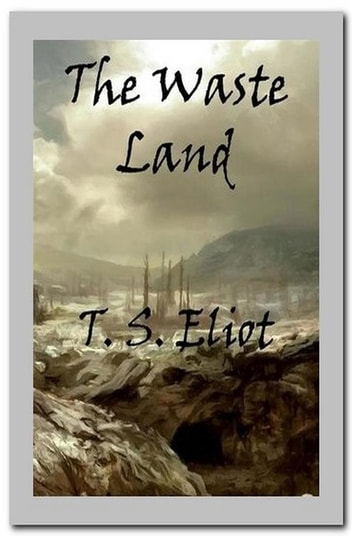
● Topic :- A Perspective on Indian Thoughts in T.S.Eliot's Poem - 'The Waste Land' 


● Submitted to :- Smt.S.B.Gardi Department of English, Maharaja Krishnakumarsinhji  Bhavnagar University 


● Email Address:- hetalpathak28@gmail.com 


● Date of Submission:- 31st March 2023


     A Perspective on Indian Thoughts in T.S.Eliot's Poem - 

  ' The Waste Land ' :- 


□ Table of Contents :- 

▪︎Introduction 

 ▪︎ T.S.Eliot's interest in Indian Culture and Spirituality 

 ▪︎ Overview of the role of Indian Thoughts in the Poem

 ▪︎ Examples of Indian references in T.S.Eliot's Other Works

▪︎ Conclusion 


◇ Introduction  :- 

T.S.Eliot (Thomas Stearns Eliot) Considered one of the 20th century major Poets. The 1948 winner of the Nobel Prize in Literature, T.S.Eliot is highly distinguished as a Poet, literary critic, a dramatist, an editor and a Publisher.  In the Preface to Four Lancelot Andrews , he proclaimed himself to be ; 


    " Classicist in literature, Royalist in politics, and Anglo - Catholic in religion." 


In 1910 and 1911, While still a College Student, he wrote ' The LoveSong of J. Alfred Prufrock' Published in Poetry Magazine, and Other Poems that are landmarks in the history of modern Literature. Elliot 's most notable Works include  ' The Waste  Land ' (1922) , 'Four Quartets' (1943) and the Play ' Murder in the Cathedral ' (1935). His awards and honours include the British Order of Merit and the Nobel prize for Literature. Despite his enduring Popularity, Eliot and his work have been Criticised as having Prejudiced views, Particularly anti - Semitism.


  ' The Waste Land ' is a long Poem by  T.S.Eliot,  Published in 1922. The 433 line, Five Part Poem was dedicated to Fellow Poet  Ezra Pound.  It was one of the most influential works of the 20th century. The Poem is divided into 5 Parts.


  1. The Burial of Dead

  2. A Game of Chess 

  3. The Fire Sermon 

  4. Death by Water 

  5. What the Thunder Said 


 This Poem expresses with  great Power  the disillusionment and disgust of the Period after World war - I.  The Waste Land Poem initially met with Controversy as its Complex and erudite Style ,  Praised for its Modernism.


 ◇ T.S.Eliot's interest in Indian Culture and Spirituality :- 


T.S.Eliot's interest in Indian Thoughts Came largely through the influence of his teachers at Harvard. After Studying for one Year in Paris which was a centre for Sanskrit Studies. T.S.Eliot back at Harvard in September 1911,Studied ancient Hindu Literature and Scriptures.  A reading of Eliot's Poetry reflects the Contribution and influence of the ideas and Wisdom of Ancient  India. As Narasimhaiah Said of Eliot ; 


    " For Indian Thoughts and Sensibility he would have written altogether different kinds of Poetry. "  


  In his Poetry, references may be found to the Vedas , the Upanishads, the Bhagavad - Gita, Patanjali 's Yoga - Sutras and Buddhist Literature.  One of the most Famous Examples of Indian thought in Eliot's Poetry is ' The Waste Land '.  There are two Well - known examples of Hindu influence both coming at the end of the Poem in the Section entitled - 

 ' What the Thunder Said '.  At the very end we find the  triple use of the word  - ' Shantih' which is both Vedic in origin and Upanishadic in Content. In his notes, Eliot himself offers this explanation of the Word : Shantih, a Formal ending to an Upanishad.  ' The Peace which Passeth Understanding '  is our Equivalent to this Word. 


 Eliot's Universalism is the result of his Cosmopolitan intellectualism and Poetic Sensibility which transcends all sorts of barriers ranging from Caste, Creed , religion and Spatial Variance. It is Plausible to determine abundance of influences on Eliot's mind and his Writings : Indian Christian Bradleyean Said ; 


   " Eliot's Presented the Credentials of a Wide- ranging Poetic Sensibility by Incorporating  in his Writings not Only the 'best' of European Culture but also of Indian thought. "   


" The Poet's mind is a Complex mechanism to absorb and to recreate Something new and Strange ".   As regards T.S.Eliot, he was an avid believer in Constant Study throughout his life, hence the range and Variety of his interest was quite amazing. The Exploration of different Sources and influences on the Works of Eliot because of their multifarious layers of suggestions and implications has emerged as a well established and Settled routine because his works are the replica of his ardent and erudite Scholarship. 


 ◇ An Overview of the role of Indian Thoughts in the Poem - 

  ' The Waste Land ' :- 


T.S.Eliot's ' The Waste Land ' an important landmark in the history of English Poetry. After its Publications, it found a resounding and reverberating success in World Literature because of its Universal theme and thought Content. This Poem has Quotations and allusions derived from more than thirty writers ranging from Vigil , Ovid , Dante to Shakespeare, Milton and Spenser Etc. Moreover , the mythical material is drawn from Jessie Weston's book :- ' From Ritual to Romance ' & James Frazer 's book :- ' The Golden Bough.' 


Apart from these books, The Indian Thoughts especially Hinduism and Buddhism exercised a Conspicuous and impressionable influence on Eliot ' s mind. The ancient Wisdom of mind had attracted the attention of many intellectuals of western Countries. Elliot Studied the Vedas, the Upanishads, Patanjali and Pali. He does not hesitate to remark ; 


  " Long ago I Studied the ancient Indian languages , and While I was chiefly Interested at that time in Philosophy, I read a little Poetry too and I know that my Poetry shows the Influence of Indian thought. " 

 of the third section 

The titleof the Poem- ' The Fire Sermon' is derived from the Famous Sermon of Lord Buddha to the assembled Priests on the Suffering and pains of modern humanity which arise from their reckless Pursuit of Passion and Sensuality. Lord Buddha Chants ; 


   " All things are on Fire / They are on Fire of infatuation ; with birth , old age , death , Sorrow lamentation , misery , grief and despair. " 


In the Poem ' Fire' Used as a Metaphor, which Symbolises lust. But According to Hindu Scriptures there exists a Superior Fire of Tapa which burns the Flames of lust and the human Soul enjoys the bliss of Purification 'Anand'. 


 The Waste Land is both Vedic in Origin and Upanishadic as regards its Spiritual Matrix. The Poem ends with the Chanting of Shantih which Eliot drew from  ' Brihadaranyaka Upanishd.  This Upanishad Comprises Six chapters Which are called Aranyakas and these are Spoken in desert like Condition and Brihad means Great from its extent. As the Upanishad , The Waste Land delivers a message of Salvation for modern humanity from their living death. 


 The Protagonist of the Poem Tiresias who Perceives the entire Panorama of desolation is like Drasta in Upanishads, what Tiresias Sees is the Substance of the Poem, So whatever Drasta Seens is the Content of the Upanishads.  As two sexes meet in Tiresias, they exist in Prajapati too. Both Tiresias and Drasta view the entire Panorama of desolation in their respective Spatial Settings ; 


     " Ganga Was Sunken and the limp leaves waited for rain , While the Clouds Gathered Far distant , over Himavant . 

   The Jungle Crouched , hummed in Silence then Spoke the Thunder." 


Eliot has employed the Pure Sanskrit word 'Ganga' because of its Spiritual, mythological and religious association with Himavant. Ganga is the divine river called Ganga Mata by Hindus because of the Consort of Lord shiva with this on earth. T.S.Eliot has deliberately used Sanskrit words for this holy mountain which is believed to be the abode of shiva and Parvathi. Both Ganga and Himavant have been described to tell the European the story of restraints and discipline, which would guide them the way to replenish their Waste lands with the Spiritual Water. 


 T.S.Eliot described Ganga Sunken because it suits the Symbolic Strain of the Poem. Ganga is Sunken because it reflects the debased and miserable condition of Civilization.  


 In the Upanishad, The message of the Thunder is emblematic of the cryptic mode of Prajapati 's teaching to his three kinds of disciples namely God's, men and demons. After Completing their Prescribed learning phase , the three disciples approach the father Preceptor and ask him what virtues they should cultivate in themselves to lead a meaningful life. Prajapati utters Syllable 'Da' three times, with a different meaning for each of them. 


  □ For God's ' Da' means :- Damyata ( Control Yourself ). 


 □ For men 'Da' means :- Datta ( Be a Giver ). 


 □ For Demons ' Da' Signifies :- Dayadhvam ( Be kind , Compassionate ). 


This Symbolic event from Upnishada would turn into Oasis unless Prajapati's disciples practise them earnestly in their lives. In the context of Modern humanity, Datta signifies that man should Sacrifice himself for a noble cause which would be Possible only in moments of Great emotional excitement when human heart throbs with Passion , and the step once taken can not be retracted back after Prudential Consideration.  " In Rigveda , Maharishi Dadhichi Sacrificed himself for a noble Cause. " 


 The Thunder Spoke to them a second time and repeated the Syllable 'Da' which means - Dayadhvam that is to Sympathise. God commanded modern People to come out of their Prison of self and enter imaginatively into the Sorrow and Suffering of others. The Thunder Peals for the third time, instructing the God's directly and human beings  indirectly to control themselves - Damyata. This time the message underlies the necessity of regulating the heart so far given over to blood or impulsive living. The well disciplined heart makes life go easy in the same way as the gay boat glides safely under the expert hands of a sailor. For the Controlled heart , even the natural elements give way to and the sea becomes calm and quite; 


     ' Damyata : The boat responded Gaily , to the hand expert with sail oar ; 

 The sea was calm, Your heart would have responded. 

  Controlling hands.' 


By Controlling his impulses and Passions and leading a disciplined life, man can cultivate the awareness of the self and can live in harmony with the external laws.


 In the last Part of the Poem - T.S.Eliot alluded to the Phrase - 'Shantih , Shantih , Shantih…'  The word Shantih is also very significant from an Indian Point of view. The word Shantih is Purposefully repeated there to indicate Peace. T.S.Eliot wants the Universe to be at Peace, including Peace for the Waste landers, those who live in an acute atmosphere of awe , Fear, doubts and Frustration.  


◇ Examples of Indian references in T.S.Eliot's Other Works :- 


It is well known that Eliot had a profound interest in religion, an interest that only increased after his conversion to Anglicanism. Eliot also expanded his religious interest to other systems of faith, concretely Buddhism and Hinduism. He also studied widely religious authors, such as Dante and Milton. 


T. S. Eliot considered ‘Four Quartets’ his masterpiece. Besides Dante, Shakespeare, The Bible and other Christian mystics, Eliot was also greatly influenced by Indian Philosophy and mysticism- mostly by The Bhagavad Gita, which is universally acknowledged as one of the world's literary and spiritual masterpieces.

 His thorough knowledge of the Bhagavad Gita is clearly evidenced by his statement that; 


   " The next great Philosophical Poem to the Divine Comedy with my experience. " 


  ‘The Four Quartets’ is the most perfect piece of poetry ever written in Eliot’s whole literary career, which presents the best of Eliot in both form and thought. A Hindu thought, as expressed in the Bhagavad Gita, becomes the central theme of the poem as Eliot’s need of finding solace through Vedic metaphysics.


 George Williamson informs that ; 


   " The basic idea Contained in ' Four Quartets' is seen as analogous in both Christian and Hindu thought  Or the Bhagavad Gita." 


In fact, the Bhagavad Gita has largely been followed in both its form and content in the ‘Four Quartets.' Eliot’s repeated emphasis on humanity and prayer in the ‘Four Quartets’ is common to both Christianity and Hinduism.

'Four Quartets’, in a perfect bond for the search of the Ultimate Truth, moksa - redemption and an inter-linked approach to salvation.  Eliot’s anxiety of a lost identity, awe, anger and dullness created the atmosphere to write the ‘Four Quartets'. 


  So, 'Four Quartets' and 'The Waste Land' both works by T.S.Eliot can be truly Considered as Masterpieces in which Eliot was greatly influenced with Indian Thoughts and Philosophy.  


◇ Conclusion  :- 

To Conclude, T.S.Eliot 's poem 'The Waste Land' bears the mark of Indian Wisdom to Considerable extent. However, to Confine it to Sheer Indianness will not be a true Justification to this Poem which bears Universal Outlook and Hindu, Vedic and Buddhist religious Undertones Constitutes a Part of the Poet's Universal attitude. 


[ Words :- 2108]

[ Images :-  08] 


Works Cited :- 


“T. S. Eliot.” Poetry Foundation, Poetry Foundation, www.poetryfoundation.org/poets/t-s-eliot.


“The Waste Land.” Encyclopedia Britannica, Encyclopedia Britannica, Inc., 22 Feb. 2023, www.britannica.com/topic/The-Waste-Land


T. S. Eliot’s the Waste Land - the Criterion. www.the-criterion.com/V5/n2/Rajani.pdf.


Thanks for Visiting…

Sunday, 19 February 2023

War Poetry

                               Thinking Activity 

                 ' War Poetry'   :- 

Welcome readers! Here I am going to write down one another blog. This blog is a response to the thinking activity given by Megha Ma'am - Department of English, Bhavnagar University - MKBU. This blog is also a Part of our thinking activity. 

  In this Particular blog, I will discuss some of the major Points which includes understanding of war Poetry, characteristics of war Poetry, and Some of the important themes in war Poems.


  • Major War Poets 

  • His Poems :- 

  1. Siegfried Sassoon

      The Hero

  1. Wilfried Owen 

    Dulce et Decorum Est

  1. Rupert Brooke 

    The Soldier 

  1. Wilfrid  Wilson Gibson 

  The Fear 

  1. Ivory Gurney 

  The Target

So, These are some major war Poets and their Poems, through which they can express their feelings, thoughts and emotions.


 • What is War Poetry :- 

While we are discussing about war poets, First it is very much important to be  understand about war Poetry that Because of the war situations how it affected the lives of human beings. Generally poets are expressing their own ideas and emotions through literature. So, that is how war poets also shared their feelings and emotions through Poetry. In simple terms one can easily understand that war Poetry means a Poetry which deals with the subject of war. 

  War poetry is a literary genre originated  during the time of war when  hundred of soldiers, and also civilians caught up in conflict. They started to write poetry as a way of striving to express extreme emotions at the very edge Experience

   Poets have written about the experience of war since the Greeks, but the very young soldiers poets of the first world war established war Poetry as a literary genre. Their combined voice has become one of the most defining text of Twentieth century Europe. 

  As we are Discussing about War Poetry, it is important to notedown and remember the Timeline of First world war and second world war. 


    First World war 

1914 - 1918

  Second World war

1939 - 1945


 • Characteristics of war Poetry :- 

Following are the Major characteristics of war Poetry. 

• It uses gruesome and showing imagery.

• It signed a break - off from the contemporary Poetic tradition.

• Realist document of war with all its brutality. 

     As we have seen the List of war poets , who were involved directly in the war and eye - witnessed to see the brutality in the name of national pride on the battlefield. 

  • Purpose of War Poetry :- 

• Poetry is the best way to express someone's ideas and expression during the war.

• Another main reason and purpose for writing poetry is to show the the true picture of the war.

 • People can understand that Due to the situations of war it affected the lives of human beings. 

 • It creates a sense of horror. 

 • Major Themes of War Poems :- 

Following are the Major Themes of the war poems. They are given as below.

 • The loss of Innocence

 • Brotherhood and Relationship 

 • The horror of war 

 • Disillusionment with Religion

 • Emotions and feelings


 Thanks for Visiting..

Assignment Paper No. 210(A)

  ● Name :- Hetal Pathak ● Roll No. :- 09  ● Semester :- 4 [ Batch 2022- 2024]  ● Enrollment No. :- 4069206420220022 ● Paper No. :- 210(A) ●...